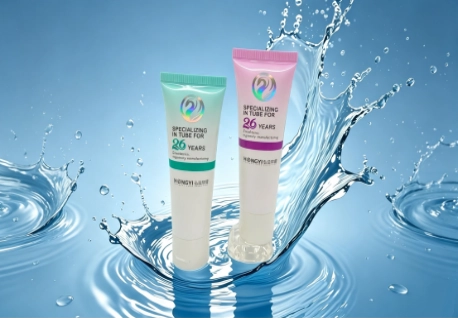
Face wash is used every day. Users often apply it with wet hands or while traveling. Packaging therefore controls dispensing, storage, transport, and brand perception.
For skincare companies, face wash packaging tubes are a practical choice. They are light, easy to squeeze, and suitable for gels, creams, foams, and exfoliating cleansers. However, material structure, capacity, outlet size, cap style, decoration, and filling method can change the user experience. This guide explains how to choose facial cleanser tubes for your formula, market, and customer routine.
Why Face Wash Packaging Tubes Work So Well?
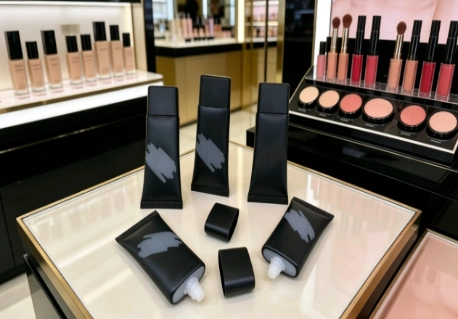
A cleanser package must handle frequent opening. It must resist water exposure. It must endure repeated squeezing. It must also survive transport without becoming messy. Compared with many rigid containers, cosmetic squeeze tubes offer a useful balance of protection, portability, and controlled dispensing.
Key benefits include:
- Easy one-hand use: Customers can dispense cleanser quickly, even with wet hands.
- Better dosage control: A suitable outlet limits waste and keeps each use consistent.
- Cleaner storage: The formula stays inside a closed pack rather than being touched directly.
- Strong shelf communication: The tube body provides space for benefits, directions, ingredients, and branding.
- Flexible size choices: Brands can offer samples, travel packs, daily products, and family sizes in one format.
Materials and Wall Structures for Facial Cleanser Tubes
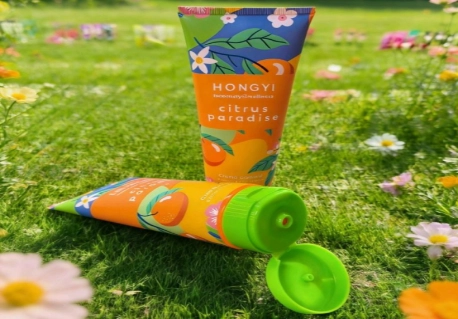
The material must match the cleanser. It should not be chosen only for desired appearance. A mild cream cleanser and an active exfoliating formula may need different levels of oxygen, light, moisture, or chemical resistance. Before artwork begins, packaging teams should review compatibility, storage conditions, shelf-life goals, and filling temperature.
PE Cosmetic Tubes for Daily Cleansers
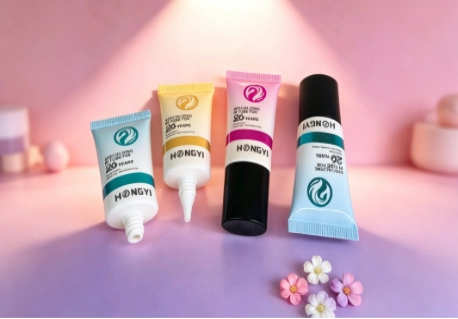
PE cosmetic tubes are widely used for face wash. Polyethylene feels soft. It squeezes smoothly. It also handles repeated compression. It suits many gel, lotion, and cream cleanser formulas. They can be white, colored, pearlescent, transparent, glossy, or matte.
At Hongyi Plastic, we offer skin care plastic tubes in different diameters, capacities, shapes, and surface styles. A flexible tube body helps users dispense thick cleanser. The shoulder and cap provide enough structure for storage and travel.
Single-Layer and Multi-Layer Structures
A single-layer PE tube may suit stable, everyday formulas. More sensitive products may call for a multi-layer wall with stronger barrier performance. Depending on its construction, a multi-layer tube can slow the movement of oxygen, moisture, aroma, or light.
Hongyi Plastic supports custom cosmetic tube packaging using single-layer PE, multi-layer co-extrusion, aluminum-plastic structures, and PCR-containing materials. Choose the structure after formula and package compatibility testing.
Choosing the Right Tube Capacity
Capacity affects price, positioning, shipping, usage time, diameter, and printable area. Travel cleansers often need slim formats. Daily products require easy handling and clear labeling. The planned sales channel also matters. A sample for a subscription box has very different space and cost requirements from a full-size retail cleanser.
10–30 mL for Samples and Travel
Small facial cleanser tubes work well for trial kits, hotels, subscription boxes, gifts, and short trips. They lower the commitment for first-time buyers. They also let brands introduce a new formula at an accessible price.
With limited artwork space, focus on the product name, main benefit, net content, and readable required details. The tube must still be easy to squeeze, even when its diameter is narrow.
30–60 mL for Premium or Portable Products
This range suits concentrated cleansers, gym-bag products, and premium skincare sets. Hongyi Plastic’s 30–50 mL PE soft tube has a 30 mm diameter. It supports decorative choices such as gradient color, screen printing, and hot-stamped details. It is a useful reference for portable packaging with a stronger shelf effect.
80–120 mL for Daily Retail Face Wash
For many skincare lines, 80–120 mL is a familiar daily-use range. It provides enough product for regular use. It also remains easy to store and ship.
A 95–100 mL PE dispensing tube with a 40 mm diameter gives brands a broad front panel for product claims and directions. This format can suit gel, cream, clay-based, and gentle exfoliating cleansers.
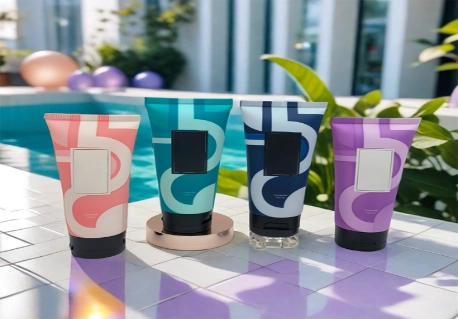
Caps, Outlets, and Dispensing Performance
The closure should open easily. It should close clearly. It must resist leakage. It should also remain comfortable during repeated use. The outlet must match formula thickness. A poor match may cause bursts, slow flow, residue, or waste. Packaging teams should assess these parts as a complete dispensing system. They should not select the cap and tube body separately.
Flip-Top Caps Versus Screw Caps
Flip-top caps are convenient for daily face wash. They can be opened with one hand. They also allow the tube to stand on the cap. This helps the cleanser move toward the outlet as the pack empties.
Screw caps can create a neat, premium appearance. They may suit travel sizes. However, small caps can be dropped or misplaced. Brands should test them with wet hands before approving the pack.
Matching the Outlet to the Formula
A light gel may flow too quickly through a large opening. A thick cream or scrub may be difficult to press through a narrow one. The supplier should review viscosity, particles, desired dose, and closure design together.
During testing, check:
- The amount released with a normal squeeze
- Whether the cleanser drips or separates cleanly
- Residue around the opening after use
- Leakage after vibration, heat exposure, and transport
- Dispensing when the tube is nearly empty
These checks help cosmetic squeeze tubes feel reliable in daily use. They do more than simply look attractive in product photos.
Decoration That Helps Customers Choose
Decoration should help shoppers identify the cleanser quickly. Color, finish, typography, printing, and cap details must stay readable online, on the shelf, and in bathroom lighting. The design should also reflect the intended position of the cleanser. This position may be clinical, natural, premium, gender-neutral, or designed for sensitive skin.
Printing and Surface Finishes
Common choices include offset printing, silk-screen printing, hot stamping, labeling, matte varnish, glossy varnish, and gradient effects. Each process creates a different visual and tactile result.
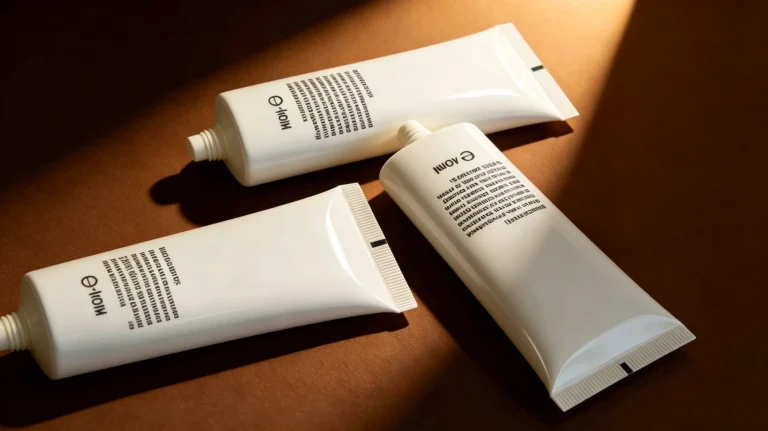
A matte tube can feel calm, modern, and skin-focused. Gloss can suggest freshness or hydration. Metallic details may add a premium accent. They should not weaken legibility or make the package look crowded.
Decoration must also remain stable during filling, sealing, shipping, and repeated squeezing. Brands should ask for printed samples whenever the design contains fine lines, small text, gradients, or several decoration processes.
Design for Real Customer Use
Good face wash packaging tubes guide the eye. The front should state the product type and main benefit quickly. The back should keep directions and warnings clear. Strong contrast matters. Tubes curve, reflect light, and may be viewed from several angles.
Review the design after repeated squeezing. Layouts with a clear information order and flexible spacing usually age better. Important words should not be placed too close to the tail seal, tube shoulder, or highly curved edges.
Sustainability and Production Questions
Sustainable packaging involves weight, material count, decoration, recyclability, shipping, product waste, and manufacturing quality. A tube that empties well can reduce wasted formula.
Ask your supplier about:
- PCR content and available material grades
- Mono-material or simplified structures
- Lightweighting without weak tube walls
- Ink, coating, and decoration choices
- Sealing, printing, and dimension checks
- Minimum order quantity and lead time
- Sampling and formula compatibility testing
Hongyi Plastic can adjust tube diameter, capacity, color, shape, and decoration for different brand needs. Our available diameters range from 13 mm to 60 mm. We provide offset printing, silk-screen printing, hot stamping, and labeling. We also support proofing before mass production.
Working With Hongyi Plastic on Custom Packaging
Selecting custom cosmetic tube packaging is easier when design, samples, tooling, production, and quality review are connected. Hongyi Plastic has focused on cosmetic tubes and OEM/ODM services since 2009. Our work covers materials, mold development, printing, cap matching, tail sealing, and production.
Brands can begin by reviewing our cosmetic tube product collection. They should share the cleanser type, target capacity, order quantity, artwork direction, and launch plan. Our team can compare existing molds with new development. We can suggest a package that fits both the formula and commercial target.
Our production information includes ISO 9001 and ISO 45001 certification, automated equipment, and quality-controlled workshop processes. Buyers can visit our company profile for more details about our capabilities and product categories.
Conclusion
The best face wash package is not chosen by appearance alone. It combines formula compatibility, convenient dispensing, dependable sealing, readable design, suitable capacity, and practical production terms. Face wash packaging tubes remain a strong choice. They are light, portable, simple to use, and flexible enough for many skincare positions. Start with the cleanser texture and customer routine. Then select the material structure, outlet, cap, size, and decoration. Test the complete pack before mass production. This includes wet-hand use, transport, leakage, and near-empty dispensing. With the right development process, well-made facial cleanser tubes can protect the formula. They can strengthen the brand. They can also make daily cleansing easier from the first use to the last.
FAQs
Q: What capacity is best for daily face wash packaging tubes?
A: 80–120 mL suits most daily retail cleansers.
Q: Which material is common for cosmetic squeeze tubes?
A: PE is flexible, light, and easy to squeeze.
Q: What is Hongyi Plastic’s usual minimum order?
A: Most custom projects start at 10,000 pieces.