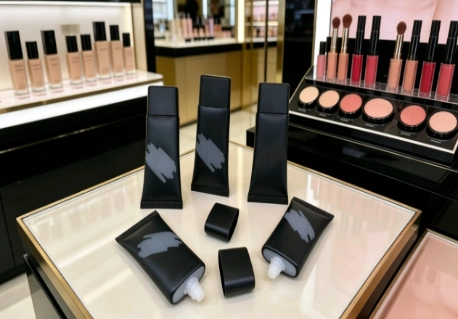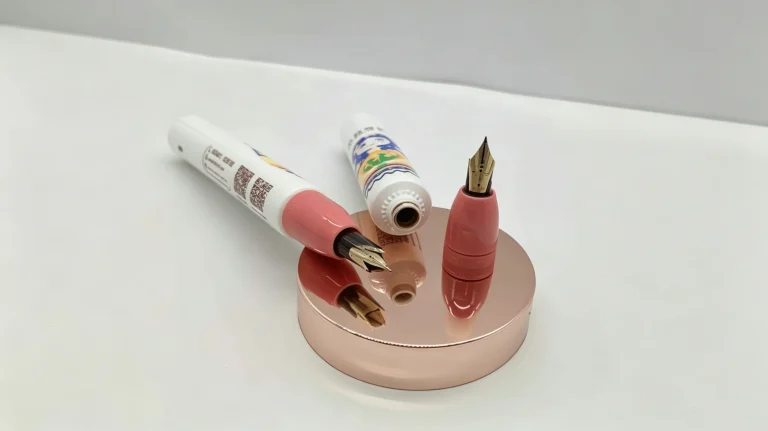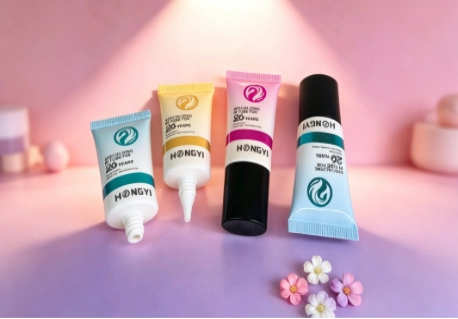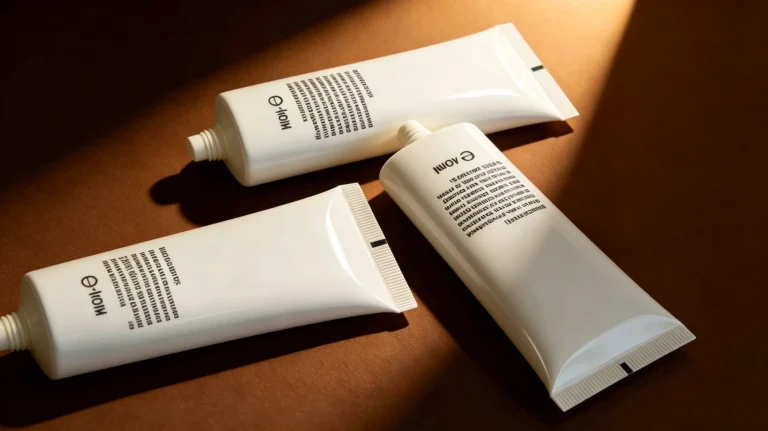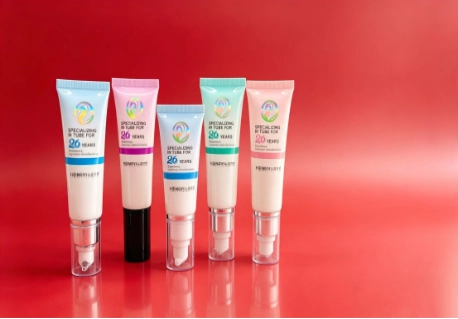
Choosing between lotion bottles with pumps and squeeze tubes is not simply a matter of appearance. The package controls how much lotion comes out, how clean the opening stays, how easily users reach the remaining formula, and how the product fits into daily routines. It also affects filling, shipping, material use, retail presentation, and production cost.
For skincare brands, the better lotion packaging format depends on the formula and the target customer. A lightweight facial lotion may benefit from measured pump dispensing. A thick body lotion may work better in a flexible tube that users can squeeze with greater force.
En plástico Hongyi, we manufacture customizable flexible tube packaging for skincare, personal care, and cosmetic products. Our experience with pump dispenser tubes and lotion squeeze tubes helps brands compare both formats according to real product needs.
What Is the Main Difference Between Pump Packaging and Squeeze Tubes?
Both formats protect lotion and help users dispense it without placing their fingers inside the package. However, they work in different ways. Lotion bottles with pumps use a mechanical dispenser to draw the formula upward. Squeeze tubes rely on pressure applied directly to a flexible tube body. That structural difference changes the entire user experience.
How Lotion Bottles with Pumps Work
A pump bottle normally combines a rigid container, dip tube, pump chamber, actuator, and closure. Pressing the actuator draws lotion through the dip tube and releases it from the nozzle. Many pumps provide a fairly consistent amount with each complete press.
This controlled action makes pump packaging attractive for facial lotion, hand lotion, lightweight body care, and products used in measured amounts. Users can operate some pumps with one hand, which is useful beside a sink or on a dressing table.
However, traditional lotion bottles with pumps may become difficult to use near empty. Lotion can remain around the walls, below the dip tube, or in corners at the bottom. Tilting the bottle may help, but the pump often stops working before every gram is removed.
How Lotion Squeeze Tubes Work
A squeeze tube uses a flexible body, shoulder, nozzle, closure, and sealed tail. The user presses the tube body, forcing lotion toward the opening. The amount dispensed depends on the opening size, formula thickness, tube flexibility, and hand pressure.
Lotion squeeze tubes are easy to carry and familiar to most consumers. Users can fold or roll the tube as the lotion runs low, which may help them remove more product. Tubes can also be stored cap-down, allowing gravity to keep the formula close to the opening.
Brands can explore different diameters, capacities, and structures through our skincare plastic tube collection.
Are Pumps Better for Hygiene and Dosage Control?
Hygiene and controlled dispensing are major reasons brands consider pump packaging. Yet the word “better” needs context. A pump may provide a cleaner and more measured experience, while a well-designed squeeze tube can also limit direct contact with the formula. Formula viscosity and closure design remain important in both cases.
Pumps Can Deliver a More Repeatable Amount
Pump dispenser tubes and bottles can provide a more regular dose when the user presses the actuator fully. This feature is valuable for facial lotion, concentrated treatment products, makeup primer, and other formulas where users need a smaller amount.
Measured dispensing can also support clearer directions. A brand may tell the customer to use one or two full presses rather than describe an uncertain amount. However, output can change if the user presses only halfway, the pump loses its prime, or a thick formula moves slowly through the mechanism.
Nuestra 25 mm pump head plastic tube combines a flexible PE body with a PP pump. Its 20 mL–40 mL capacity can suit lightweight creams, lotions, and concentrated skincare products.
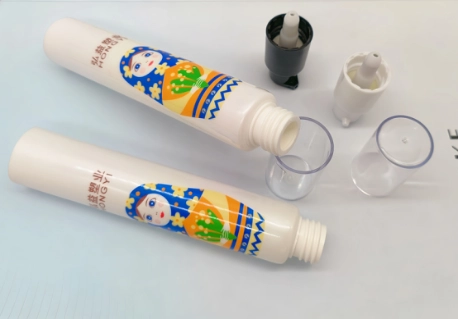
Squeeze Tubes Can Still Support Clean Use
A lotion squeeze tube does not require users to place their fingers inside the package. The formula moves directly from the nozzle to the hand, skin, or applicator. A suitable cap protects the opening between uses.
The main hygiene concern is residue around the nozzle. If too much lotion collects near the opening, the cap may become messy. Brands can reduce this problem by matching the orifice to the formula and testing how cleanly the lotion stops flowing after pressure is released.
For thick products used in larger amounts, simple squeeze tube packaging may provide a cleaner experience than a pump that clogs or dispenses slowly.
Which Format Works Better for Different Lotion Formulas?
The package must fit the lotion’s physical behavior. A structure that works well with a thin emulsion may perform poorly with a dense cream. Brands should not select lotion packaging from an empty sample alone. Filled samples reveal whether the formula flows, stops, seals, and dispenses as expected.
- Light facial lotion: Pump packaging often provides cleaner, smaller doses.
- Medium-viscosity moisturizer: Both pump dispenser tubes and lotion squeeze tubes may work after testing.
- Thick body lotion: A flexible squeeze tube may require less effort than a narrow pump pathway.
- Rich hand cream: Squeeze tubes offer direct pressure and convenient portability.
- Concentrated treatment lotion: A pump can help users apply a more controlled amount.
- Lotion with particles: Pump channels may clog, making a wider tube opening more practical.
Nuestra 30 mm pump head plastic tube offers a 30 mL–45 mL capacity. The flexible body and pump head create an alternative to traditional rigid lotion bottles with pumps, combining controlled dispensing with a soft tube structure.
User Experience: Pumps and Tubes Solve Different Problems
The best cosmetic tube packaging should feel natural during every stage of use. First impressions matter, but the near-empty experience matters too. Brands should study where the product will be used, how often customers apply it, whether they have wet hands, and whether the package needs to travel.
When Pump Packaging Creates a Better Experience
Lotion bottles with pumps can make a product feel orderly and controlled. A stable bottle is convenient on a countertop, while a covered pump head can protect the outlet during storage.
Pump packaging may be preferable when:
- Users apply the lotion in the same place each day.
- One-handed dispensing is important.
- The formula is lightweight enough to travel through the pump.
- The brand wants a measured, premium dispensing action.
- Customers should avoid squeezing out a large amount.
Pump dispenser tubes can add flexibility to this experience. Their soft bodies are lighter and easier to compress than many rigid bottles, while the pump still provides controlled output.
When Squeeze Tubes Create a Better Experience
Lotion squeeze tubes are often better for travel, gym bags, gift sets, and products used across several locations. They have fewer dispensing components and can work with a wide range of medium or thick formulas.
Squeeze tubes may be preferable when:
- Customers use generous amounts of lotion.
- The formula needs a wider outlet.
- Portability and low package weight matter.
- Users want to roll the package near empty.
- The product range needs several sizes with a consistent appearance.
Nuestra complete product collection includes PE soft tubes in several diameters, along with pump heads and other functional applicators. These options allow brands to build a packaging family around different formulas and usage needs.
Cost, Production, and Transport Considerations
User experience should guide packaging selection, but brands must also consider manufacturing and distribution. A package with more parts generally requires more assembly, compatibility checks, and quality control. Pump systems may have higher component costs than basic squeeze tube packaging.
Lotion squeeze tubes usually offer:
- Fewer separate components
- Efficient bulk packing
- Low package weight
- Broad decoration space
- Simple dispensing structures
Lotion bottles with pumps usually offer:
- More controlled output
- Strong countertop presentation
- Familiar one-handed use
- A premium dispensing action
- Greater mechanical complexity
A pump must be checked for priming, output consistency, leakage, actuator recovery, and compatibility with the formula. A squeeze tube requires testing for body flexibility, shoulder strength, tail sealing, cap fit, and product flow.
At Hongyi Plastic, our OEM/ODM services can include packaging design, mold development, sample production, printing, mass production, quality checks, warehousing, and delivery support. More information about our manufacturing and R&D background is available on our About Us page.
How to Choose the Right Lotion Packaging?
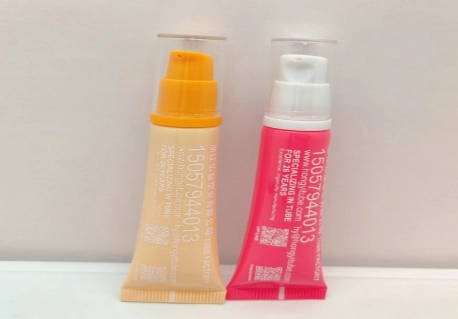
The best decision comes from comparing the formula, customer, brand position, and supply chain together. Begin with the way people use the product. Then confirm whether the chosen package can perform reliably during filling, transport, storage, and repeated dispensing.
Before approving lotion packaging, brands should ask:
- How thick is the lotion at low and high temperatures?
- How much product should come out during each use?
- Will customers use the package at home or carry it?
- Does the formula contain particles that could block a pump?
- Can users remove most of the lotion near empty?
- Will the decoration remain clear after repeated handling?
- Does the package match the target retail price?
Filled-product trials should include upright, inverted, and side storage. Brands should also test temperature changes, transport vibration, repeated opening, leakage, and dispensing near empty. These checks reveal practical problems before mass production begins.
Conclusión
Lotion bottles with pumps are better when a product needs controlled dispensing, one-handed use, and a refined countertop experience. Lotion squeeze tubes are often better for thicker formulas, travel, low package weight, and easier access near empty. Neither format is the best choice for every skincare product.
Formula viscosity, desired output, customer habits, capacity, filling method, and price position should guide the decision. Hongyi Plastic supplies customizable pump dispenser tubes and conventional cosmetic tube packaging for different lotion applications. We can support brands with tube diameter, capacity, pump or cap selection, decoration, sampling, and production. Testing the actual lotion in the final package remains the most reliable way to choose between a pump and a squeeze tube.
Preguntas frecuentes
Q: Are lotion bottles with pumps suitable for thick lotion?
A: Some are, but very thick lotion may dispense better from squeeze tubes.
Q: What capacities are available for pump dispenser tubes?
A: Hongyi Plastic offers options such as 20 mL–40 mL and 30 mL–45 mL.
Q: Are lotion squeeze tubes good for travel?
A: Yes. Lotion squeeze tubes are lightweight, compact, and easy to pack.