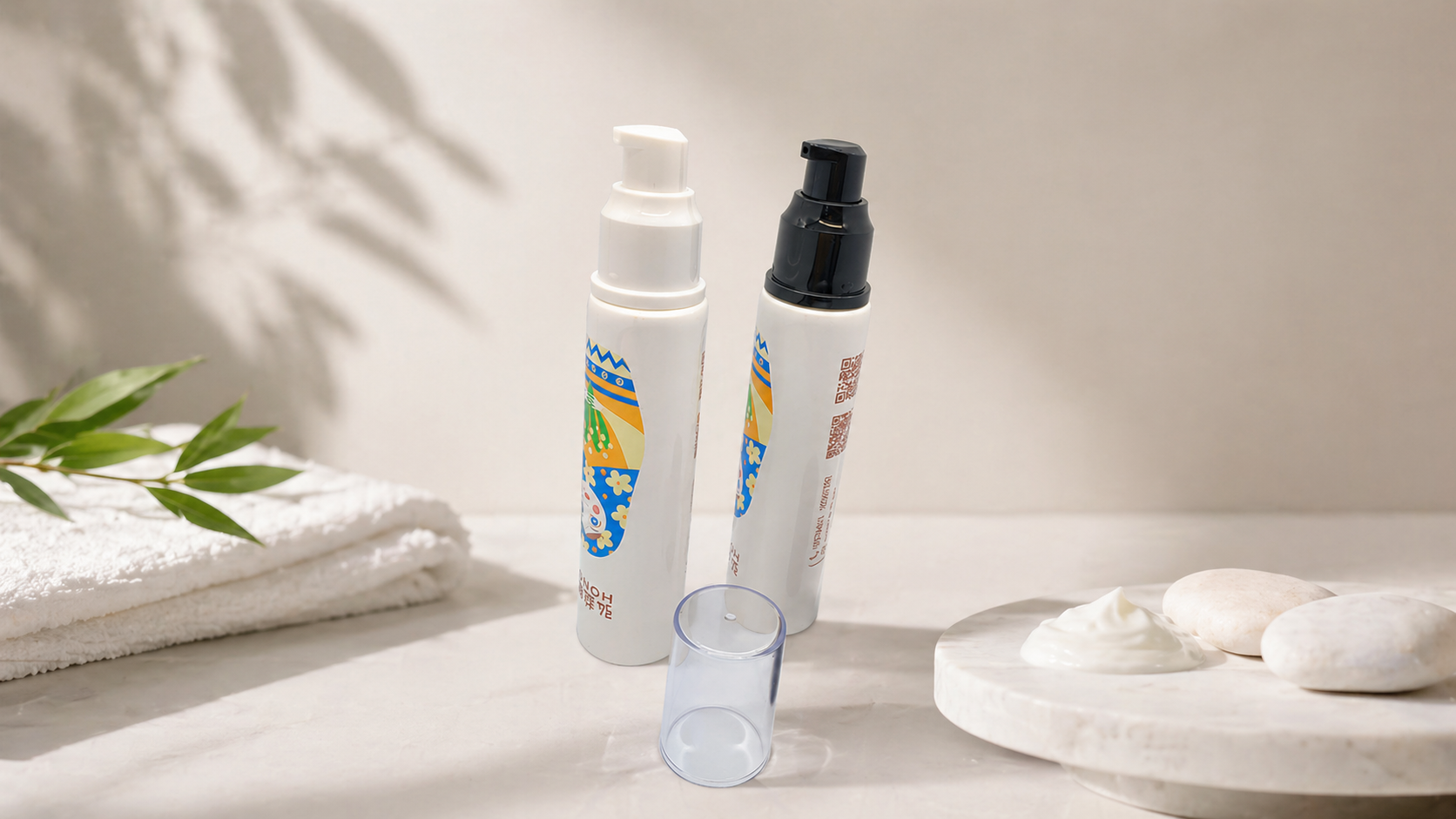
Los tubos de plástico con dosificador suelen ser mejores para el envasado de productos para el cuidado de la piel cuando la fórmula requiere una dispensación más limpia, una dosificación más precisa y una imagen más prémium. Los tubos exprimibles siguen siendo una opción práctica para productos de uso diario, fórmulas más densas y gamas de productos con precios más competitivos. En 2026, la mejor opción no reside simplemente en la nueva estructura. Depende de la textura de la fórmula, los hábitos de uso, el posicionamiento en el punto de venta, el método de llenado y el grado de control que la marca desea ofrecer al usuario.
Para las marcas de cuidado de la piel que comparan opciones de envases en tubo, esta guía explica en qué casos los envases con bomba funcionan mejor, en cuáles los tubos exprimibles siguen siendo más adecuados y qué deben comprobar los compradores antes de optar por envases en tubo personalizados.
¿Qué diferencia a los tubos de plástico para cabezales de bombas de los tubos exprimibles?
Ambos formatos son comunes en los envases de productos para el cuidado de la piel, pero ofrecen experiencias de usuario diferentes. Un tubo exprimible convencional se basa en la presión de la mano del usuario. Un tubo con bomba incorpora un mecanismo dispensador que libera la fórmula al presionarlo.
Esa pequeña diferencia estructural afecta a la higiene, el control de la dosificación, la apariencia en el estante, la compatibilidad de la fórmula y el coste de producción.
Las estructuras de las bombas se centran en la dosificación controlada.
Los tubos de plástico con dosificador están diseñados para productos en los que cada uso debe ser preciso y controlado. Esto es importante para lociones ligeras, cremas, protectores solares, prebases de maquillaje y algunas fórmulas de tratamiento. Al presionar el dosificador, el producto sale en una cantidad más controlada que la que proporciona una boquilla abierta.
Este tipo de tubo dispensador con bomba también puede complementar una rutina más sofisticada. Muchos consumidores de productos para el cuidado de la piel ahora no solo se fijan en el aspecto del envase, sino también en cómo se comporta el producto durante su uso diario. Un mecanismo de presión limpio, una dosificación estable y un cierre impecable pueden dar una sensación de mayor refinamiento a la fórmula.
Los tubos exprimibles se centran en la flexibilidad y la facilidad de uso.
Los tubos exprimibles son muy populares por su practicidad, ligereza y familiaridad. Son ideales para limpiadores faciales, cremas de manos, lociones corporales, geles limpiadores, protectores solares y muchos productos de cuidado facial diario. Para fórmulas que se aplican en cantidades flexibles, un tubo exprimible resulta muy cómodo.
Los tubos exprimibles para cosméticos también funcionan bien cuando las marcas necesitan una producción sencilla, mayor variedad de opciones de capacidad y un embalaje eficiente para la venta minorista o el comercio electrónico. Para muchas líneas de productos, esta estructura básica sigue siendo difícil de reemplazar.
Tubos de plástico con bomba vs. tubos exprimibles: ¿Cuál se adapta mejor al envasado de productos para el cuidado de la piel?
La elección correcta depende del papel que desempeñe el producto en la línea de cuidado de la piel. Un sérum de alta gama y un limpiador facial de tamaño familiar no requieren el mismo diseño de envase. El envase del tubo cosmético debe ser acorde a la fórmula, al comprador y al canal de venta.
Control de dispensación
Los tubos de plástico con cabezal dosificador ofrecen un mejor rendimiento cuando el control de la dosificación es fundamental. Reducen la posibilidad de apretar demasiado y permiten una aplicación más uniforme. Esto resulta útil para productos con un mayor valor unitario, como cremas de tratamiento, bases de maquillaje, productos para el contorno de ojos y lociones faciales.
Los tubos exprimibles son mejores cuando los usuarios necesitan mayor libertad. Un limpiador, crema corporal o crema de manos puede usarse en cantidades mayores o menos precisas. En estos casos, un control de dosificación excesivo puede resultar innecesario.
Higiene y manejo diario
La higiene es una de las principales razones por las que las marcas consideran los sistemas de dosificación con bomba. Un cabezal de bomba reduce el contacto directo con la abertura y mantiene la zona de dispensación más limpia durante su uso repetido. Esto resulta especialmente útil para fórmulas de cuidado de la piel destinadas a una aplicación limpia, para viajes o para uso profesional.
Los tubos exprimibles también pueden ser higiénicos si el tapón, la boquilla y el diseño del cierre son adecuados. Sin embargo, para productos de uso frecuente a lo largo del día, la zona de salida puede volverse menos higiénica si la fórmula es pegajosa o el diseño del tapón no es preciso.
Costo y simplicidad de producción
Los tubos exprimibles suelen tener una estructura más sencilla. Esto los hace más prácticos para productos de gran volumen, promociones de temporada, productos de cuidado de la piel para el mercado masivo y líneas de cuidado diario económicas. Además, muchos consumidores reconocen y utilizan los tubos de plástico exprimibles con mayor facilidad.
Las estructuras de cabezales de bomba añaden más componentes, por lo que los compradores deben considerar la compatibilidad, el montaje, las pruebas de funcionamiento y el coste. Esta estructura adicional puede resultar beneficiosa cuando el posicionamiento del producto lo justifica. No es necesaria para todas las referencias.
¿Cuándo deberían las marcas optar por tubos de plástico para cabezales de bomba en 2026?
No es difícil identificar los mejores casos de uso. Las marcas deberían considerar los tubos con dosificador cuando se espera que el envase mejore la experiencia del producto, y no solo que contenga la fórmula.
Para fórmulas de loción, crema, prebase y protección solar.
El envasado de lociones suele beneficiarse de una dosificación controlada. Las cremas ligeras, los protectores solares, las prebases y las texturas tipo esencia pueden resultar difíciles de aplicar si la boquilla es demasiado ancha o si se aprieta demasiado el tubo. Un dosificador permite una aplicación más precisa.
Para las marcas que diseñan envases personalizados para productos de cuidado de la piel, esto es importante. El envase debe reflejar la forma en que el consumidor usa el producto frente a un espejo, dentro de una bolsa de viaje o durante su rutina matutina.
Para líneas de cuidado de la piel de alta gama y de tamaño viaje.
Los envases con dosificador también son útiles cuando el producto necesita una imagen más cuidada en el punto de venta. Los productos de cuidado facial de tamaño viaje, los estuches de regalo, las cremas de tratamiento y las líneas de productos de alta gama suelen requerir envases compactos pero a la vez refinados.
En este caso, el empaque personalizado en tubo no se trata solo del color y la impresión. El método de apertura, la sensación al tacto de la tapa y la acción de dispensación también se convierten en parte de la experiencia de la marca.
Para conceptos de embalaje funcional
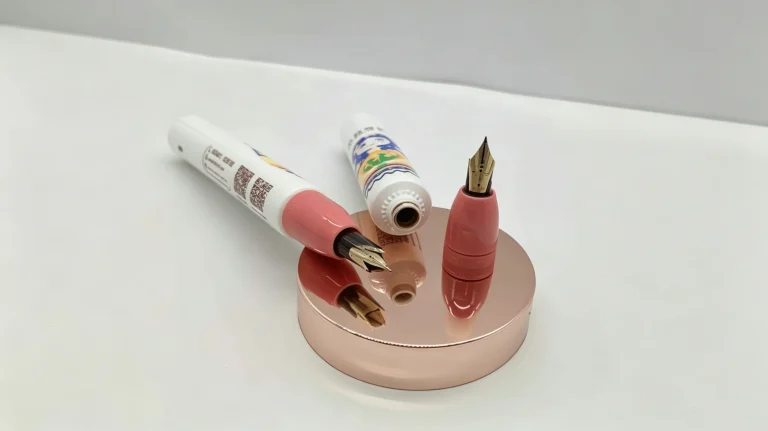
El mercado en general se inclina hacia envases que facilitan la aplicación. Un tubo de plástico funcional puede incorporar un dosificador, un aplicador de silicona, un cabezal de cepillo, un cabezal de masaje u otra estructura dispensadora. Estos formatos permiten que el envase desempeñe un papel importante en la rutina de cuidado de la piel.
Esto no significa que cada producto necesite un diseño especial. Significa que las marcas deben decidir si la estructura del envase puede resolver un problema real del usuario, como una mayor higiene, un mejor control, una aplicación más sencilla o una mayor diferenciación en el lineal.
¿Cuándo siguen siendo los tubos exprimibles la mejor opción?
Una buena comparación no debería considerar el envase con bomba como la única opción moderna. Los tubos exprimibles siguen teniendo un gran valor en muchos proyectos de envasado de productos para el cuidado de la piel.
Para productos de cuidado y limpieza facial diarios
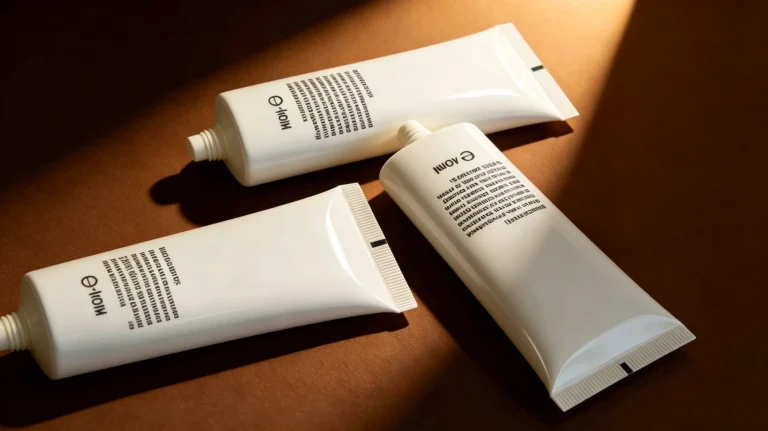
Los limpiadores, geles de ducha, cremas básicas y fórmulas de uso diario de mayor tamaño suelen funcionar bien en tubos exprimibles. Los consumidores esperan que estos productos sean fáciles de abrir, fáciles de presionar y rápidos de usar. Un simple tubo de PE puede ser más adecuado que un dosificador cuando el producto se usa en grandes cantidades.
Por este motivo, los envases exprimibles siguen siendo habituales tanto en la categoría de cuidado de la piel como en la de cuidado personal.
Para líneas de productos ligeras y rentables
Las marcas que necesitan una producción eficiente y una amplia distribución minorista suelen optar por los tubos de cartón para cosméticos. Su estructura permite el uso de tapas estándar, tubos de diversos diámetros y una decoración flexible. Además, resulta ideal para productos cuyo envase debe ser práctico en lugar de altamente técnico.
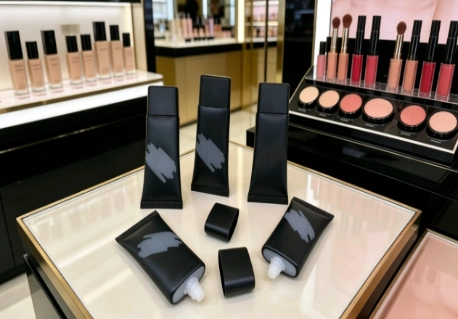
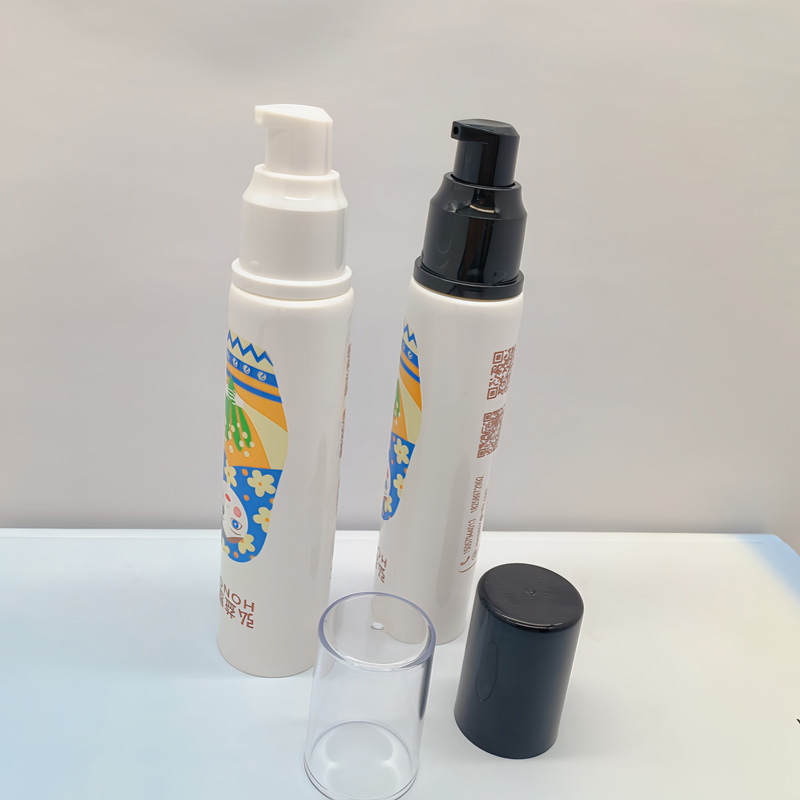
Por ejemplo, un Φ30mm diámetro del tubo, 30 gramos/ml PE material de envasado/botella del tubo ultra-delgado Se trata de un tubo de PE con un diámetro de Φ30, una longitud de manguera de 86 mm, una capacidad de 46 g/ml, un diámetro de orificio de 5 mm y soporte para personalización. Su elegante acabado en negro mate, el efecto de ventana transparente y las opciones de impresión personalizada lo hacen ideal para marcas que buscan un tubo exprimible distintivo en lugar de un envase estándar.
Para fórmulas más espesas o una dosificación más rápida
Algunas cremas, geles y productos de limpieza requieren una dosificación más amplia o directa. Un envase con dosificador permite controlar la presión y la cantidad con rapidez. Para fórmulas espesas, antes de elegir el modelo, conviene comprobar si el dosificador dispensa el producto con facilidad.
Aquí es donde comienza el verdadero desarrollo del empaque. Un tubo atractivo no basta si la fórmula no se dispensa correctamente.
Factores clave a comparar antes de elegir el envase en tubo para productos de cuidado de la piel.
Antes de elegir entre tubos de plástico con cabezal de bomba y tubos exprimibles, las marcas deben tener en cuenta varios factores prácticos. Estos detalles influyen en la calidad, la satisfacción del usuario y la fidelización.
viscosidad de la fórmula
La textura de la fórmula debe guiar la elección del envase. Las lociones ligeras, las cremas fluidas y los productos tipo prebase pueden adaptarse mejor a los sistemas de dosificación. Las cremas densas, los limpiadores, los geles y las texturas similares a ungüentos pueden ser más adecuadas para envases exprimibles.
Las pruebas son esenciales. El proveedor debe confirmar si el tubo, la abertura, la tapa, la bomba o el sello elegidos pueden manejar la fórmula sin obstrucciones, fugas o un rebote deficiente.
Posicionamiento de marca
Los envases de alta gama para el cuidado de la piel suelen requerir una mayor sensación de control e higiene. En este sentido, los envases con dosificador pueden ser de gran ayuda. Los productos de consumo masivo, en cambio, pueden necesitar un formato más directo, familiar y económico, lo que convierte a los tubos exprimibles en una excelente opción.
El empaque debe estar acorde con el precio del producto. Si la fórmula es simple y el mercado objetivo se guía por la relación calidad-precio, una bomba compleja podría no mejorar la conversión lo suficiente como para justificar la estructura adicional.
Personalización y decoración
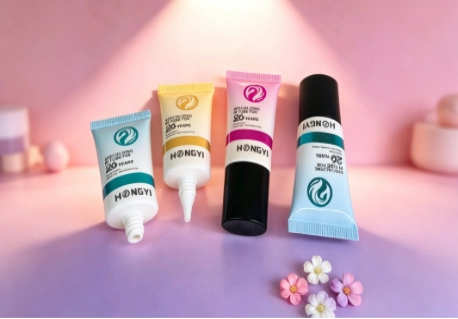
El color, la forma del tubo, el estilo de la tapa, el acabado de la superficie y la impresión influyen en la apariencia del envase de los tubos cosméticos tanto en las estanterías como en internet. plástico Hongyi apoya el desarrollo de tubos cosméticos en diferentes categorías de productos y los compradores pueden revisar opciones más amplias a través de Colección de productos cosméticos en tubo.
Para proyectos personalizados, los detalles prácticos son más importantes que las ideas meramente decorativas. Los compradores deben confirmar el diámetro del tubo, la capacidad, el material, el método de impresión, el tipo de tapa, el sistema de sellado, el plazo de entrega de las muestras y el tiempo de producción antes de aprobar el diseño final.
Planificación de la sostenibilidad
El envasado cosmético sostenible se está convirtiendo en un requisito fundamental para muchos productos de cuidado de la piel, pero debe abordarse con cuidado. Las marcas pueden considerar estructuras de polietileno reciclable, el uso de materiales reciclados posconsumo (PCR), diseños de tubos más ligeros o formatos de envase más eficientes. La mejor opción dependerá del mercado objetivo, la seguridad de la fórmula, las normativas vigentes y los objetivos de envasado responsable del comprador.
Una declaración de sostenibilidad siempre debe coincidir con el material y la estructura utilizados en el pedido final. Un lenguaje ecológico genérico no es suficiente para tomar decisiones importantes sobre embalaje en el ámbito B2B.
¿Qué preguntas deben hacerse las marcas antes de encargar envases tubulares personalizados?
La mejor opción de embalaje suele quedar clara una vez que se formulan las preguntas adecuadas.
Primero, verifique si el tamaño del tubo, la capacidad, la tapa, la bomba y la abertura se ajustan a la fórmula. Segundo, confirme qué métodos de impresión son compatibles con el diseño visual. La serigrafía, la impresión offset, el estampado en caliente, el etiquetado, los efectos de barniz y la personalización del color pueden generar resultados muy diferentes.
En tercer lugar, pregunte sobre la aprobación de la muestra. Se debe verificar la apariencia, la dispensación, el sellado, la textura y la estabilidad durante el transporte de la muestra. Esto es especialmente importante para los envases tubulares personalizados, donde pequeños cambios en el material, el ajuste de la tapa o el tamaño de la abertura pueden afectar la experiencia del usuario final.
Finalmente, confirme la cantidad mínima de pedido (MOQ), el plazo de entrega, las condiciones de pago y los requisitos de aceptación antes de la producción en masa. Un proceso de abastecimiento claro reduce los errores de comunicación y ayuda a ambas partes a controlar los riesgos.
Veredicto final: ¿Son mejores los tubos de plástico para cabezales de bomba que los tubos exprimibles?
Los tubos de plástico con dosificador son mejores cuando el envase de productos para el cuidado de la piel requiere una dispensación más limpia, un mejor control de la dosificación y una experiencia de usuario superior. Los tubos exprimibles son mejores cuando el producto requiere un uso sencillo, una mayor tolerancia a la fórmula, una menor complejidad estructural y una alta eficiencia de producción.
Para muchas marcas en 2026, la estrategia más inteligente es no elegir un único formato para cada producto. Una loción facial, un protector solar, una prebase o una crema de tratamiento pueden beneficiarse de un envase con dosificador. Un limpiador, una loción corporal, una crema de manos o un producto de cuidado diario pueden tener mejor rendimiento en un tubo flexible.
Si su línea de cuidado de la piel está comparando tubos con bomba, tubos blandos de PE o envases de tubo personalizados para el lanzamiento de un nuevo producto, Comparta sus requisitos de embalaje con nuestro equipo, y podemos ayudar a revisar el diámetro del tubo, la capacidad, el material, el proceso de impresión, la estructura de la tapa y la dirección del desarrollo de la muestra.
Preguntas frecuentes
P: ¿Los tubos de plástico con dosificador son adecuados para todas las fórmulas de cuidado de la piel?
R: No. Los tubos de plástico con dosificador se adaptan mejor a lociones ligeras, prebases, protectores solares y cremas. Estos requieren una dosificación precisa. Por otro lado, los geles espesos, los limpiadores y las cremas densas podrían funcionar mejor en tubos exprimibles. Esta conclusión se obtiene tras realizar pruebas de viscosidad.
P: ¿Qué hace que los tubos exprimibles sean útiles para el envasado de productos para el cuidado de la piel?
A: Los tubos exprimibles ofrecen ligereza, familiaridad y flexibilidad. Son ideales para diversos productos de cuidado facial de uso diario. Además, resultan prácticos para limpiadores, cremas de manos, lociones corporales, protectores solares y otros productos que no requieren una dosificación precisa.
P: ¿Qué deben confirmar las marcas antes de encargar envases personalizados para tubos de cosméticos?
A: Las marcas deben verificar la compatibilidad de la fórmula, el diámetro del tubo y la capacidad. También deben comprobar el material, la estructura de la tapa o bomba y el método de impresión. Además, deben confirmar la cantidad mínima de pedido (MOQ), el plazo de entrega de las muestras, el tiempo de producción y el rendimiento del sellado. Realice estos pasos antes de aprobar la producción en masa.